

From small businesses to large corporations, many often overlook the importance of registering their intellectual property (IP) due to cost or complicated procedures. However, Indonesian Law No. 28/2014 on Copyright and Law No. 20/2016 on Trademarks guarantee exclusive legal protection. This makes it crucial for even small business owners to understand. This article presents 4 viral intellectual property cases in Indonesia, along with key lessons for the general public.
Starbucks vs. “Starbucks” Cigarettes Case

According to Detik news, here’s how the case unfolded:
1971 – Starbucks was first established in the US.
1992 – PT Sumatra Tobacco Trading Company registered the cigarette brand “Starbucks” with the Indonesian Ministry of Law and Human Rights (Kemenkumham RI). It was approved and received brand number IDM000342818 for class 34, which includes all types of cigarettes, cigarette paper, tobacco, lighters, etc.
2005 – Starbucks registered its brand with the Kemenkumham RI for class 43, covering restaurant services, coffee shops, and cafes.
2008 – Starbucks registered its brand for class 30, which includes ground and whole coffee beans, tea, coffee/espresso-based beverages, etc.
2011 – Starbucks extended its brand registration for class 43.
2016 – Starbucks registered its brand for class 30, including ice cream, milkshakes, etc.
2021 Jul – Starbucks filed a lawsuit against PT Sumatra Tobacco Trading Company with the Central Jakarta District Court (PN Jakpus), seeking to have the “Starbucks” cigarette brand removed.
2021 Dec – The PN Jakpus rejected Starbucks’ lawsuit, stating that PT Sumatra Tobacco Trading Company had registered the “Starbucks” brand with the Directorate General of Intellectual Property (DJKI) of the Kemenkumham first. The PN Jakpus also stated:
- Difference in product classes: Starbucks (coffee, class 43) vs. cigarettes (class 34).
- Starbucks did not meet the criteria to be considered a well-known brand: Starbucks failed to prove exclusive ownership of the brand in Indonesia.
Following this decision, Starbucks appealed to the Supreme Court (MA).
2022: Starbucks’ appeal was granted. The Supreme Court issued a complete decision in the case:
- To grant the Plaintiff’s claim in its entirety;
- To declare that the Defendant acted in bad faith when submitting the Starbucks Brand Registration application Number IDM000342818 in Class 34;
- To cancel the Starbucks brand Registration Number IDM000342818 in Class 34 belonging to the Defendant from the General List of Brands with all its legal consequences;
- To declare the Plaintiff’s Starbucks brand as a well-known brand;
- To order the Co-Defendant (Kemenkumham) to abide by the Court’s decision in this case by implementing the cancellation of the Starbucks Brand Registration Number IDM000342818 in class 34 belonging to the Defendant by removing the brand registration from the General List of Brands and announcing it in the Official Brand Gazette in accordance with the prevailing Trademark Law.
The main reasons the panel favored Starbucks were:
- Proof of Brand Popularity: The plaintiff proved the well-known status of its brand through:
- Registration in 11+ countries
- Brand usage for >30 years
- Extensive promotion
- International Priority: Starbucks had registered the brand outside Indonesia before 1992 (the Defendant only registered in Indonesia in September 1992).
- Bad Faith of the Defendant:
- There were fundamental similarities in:
- Identical arrangement of letters (Starbucks)
- Same pronunciation
- The purpose of registration was proven to:
- Ride on the popularity of the Plaintiff’s brand
- Create unfair competition
- Potentially mislead consumers
- There were fundamental similarities in:
MS Glow vs. PS Glow Case
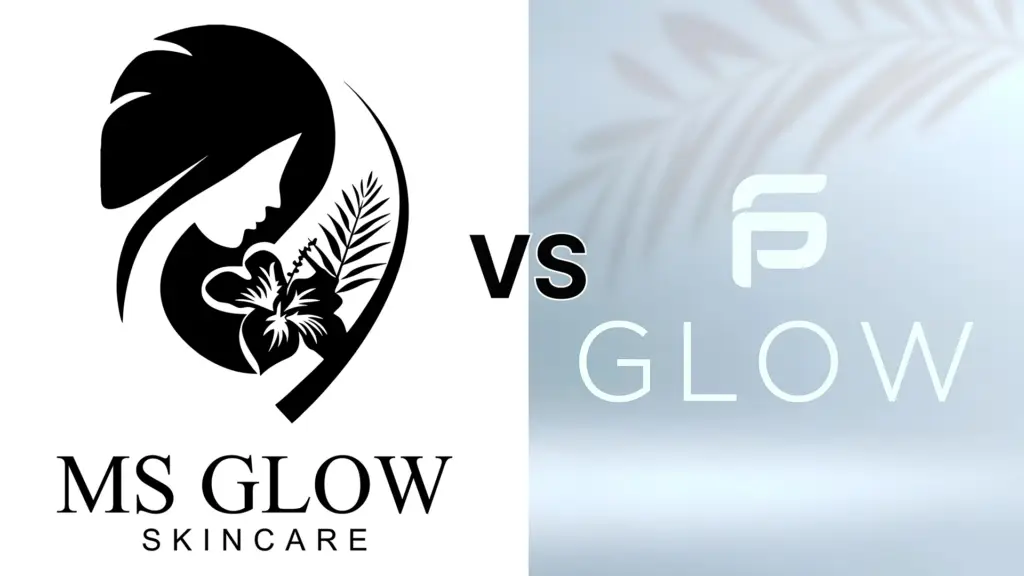
According to a journal from Tarumanegara University, the case unfolded as follows:
2016 – MS Glow registered its brand. The owner is Shandy Purnamasari.
2021 – PS Glow registered its brand. The owner is Putra Siregar.
Beginning of the Dispute: MS Glow felt that PS Glow was imitating their products and brand. MS Glow tried to contact PS Glow to ask for accountability and clarification, but there was no response. Mediation efforts also failed.
Mar 2022 – MS Glow filed a lawsuit against Putra Siregar to the Medan Commercial Court with register Number 2/Pdt.Sus.HKI/Merek/2022/PN Niaga Mdn.
In the Medan District Court’s decision on June 13, 2022, MS Glow was declared the winner, and the panel decided to cancel the registration of the PStore Glow and PStore Glow Men brands.
2022 Aug – PS Glow filed a counterclaim to the Surabaya Commercial Court, registered with Number 2/Pdt.Sus.HKI/Merek/2022/PN Niaga Sby.
In the Surabaya District Court’s decision on July 12, 2022, the panel of judges partially granted PS Glow’s claim, stating that PS Glow had exclusive rights and that MS Glow had similarities in the main trademarks for goods/services class 3 (cosmetics). MS Glow was ordered to pay compensation of IDR 37.9 billion in cash.
“Geprek Bensu” vs. “I Am Geprek Bensu” Cases
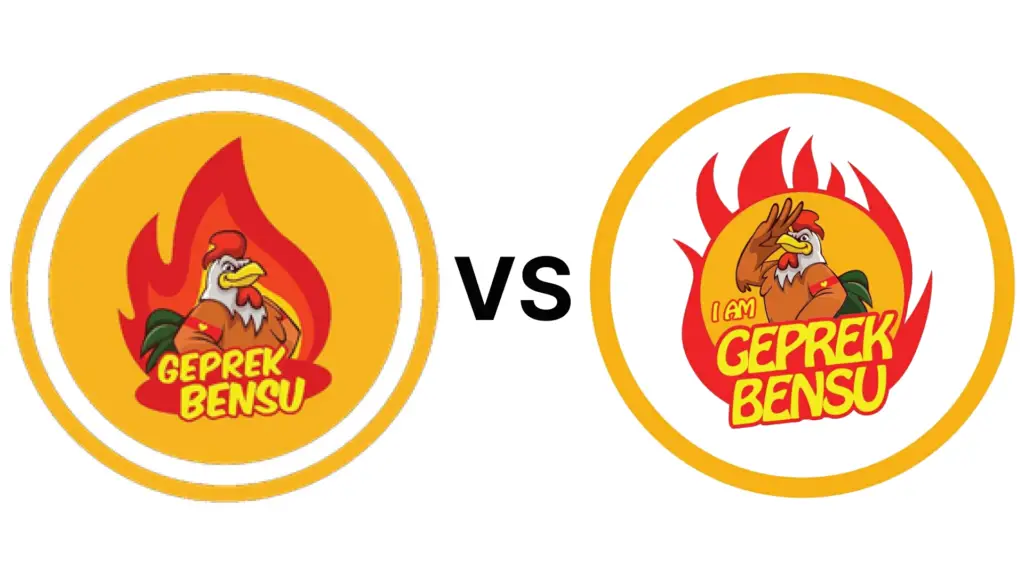
According to a journal from Sultan Ageng Tirtayasa University, here’s the timeline:
2017 Apr – Benny Sudjono registered the trademark “I Am Geprek Bensu.” At that time, Ruben Onsu was the brand ambassador, so his name and photo were displayed at several outlets of the I Am Geprek Bensu Sedep Bener/Beneerrr brand. Ruben requested that one employee be placed in the kitchen.
2017 May – Ruben received approximately IDR 663 million for his position as a promotional ambassador; this became evidence that Ruben was not the owner of I Am Geprek Bensu.
2017 Aug – Ruben withdrew the employee who had worked in the I Am Geprek Bensu kitchen and started his own business called “Geprek Bensu.” Then Ruben forbade Benny from using the name Bensu again.
May 2018: Ruben requested that the name “Bensu” be determined as an abbreviation of his name, “Ruben Samuel Onsu,” to the South Jakarta District Court with No. 384/Pdt.P/2018/PN.Jkt.Sel.
September 2018: Ruben sued I Am Geprek Bensu for using the name Bensu to the Central Jakarta District Court, registered with No. 48/Pdt-Sus/Merek/2018/PN Niaga.Jkt.Pusat.
May 2019: The Central Jakarta District Court decided that PT Ayam Geprek Benny Sujono was the legal owner and user of the brand “I Am Geprek Bensu Sedep Bener/Beneerrr” with registration number IDM000643531 class 43. The panel of judges also asked the DJKI to cancel the brand “Bensu” as an abbreviation of the name “Ruben Samuel Onsu”.
August 2019: Ruben issued a somasi (legal notice) and demanded compensation of IDR 100 billion from Benny Sujono. Benny Sujono filed a counterclaim.
April 2020: Ruben filed an appeal to the Supreme Court (MA) against the decision of the Central Jakarta District Court. The submission was registered under number 575 K/Pdt.Sus-HKI/2020. However, the Supreme Court rejected the appeal and upheld the previous decision.
October 2020: The DJKI issued a letter deleting the “I Am Geprek Bensu” brand, and Benny Sujono sued the DJKI of the Kemenkumham because he said he had won the dispute trial at the MA. The DJKI should have canceled Ruben Samuel Onsu’s Geprek Bensu brand.
April 2022: PT Ayam Geprek Benny Sujono sued Ruben Onsu for IDR 100 billion with the number 32/Pdt.Sus-HKI/Merek/2022/PN Niaga Jkt.Pst. There were 2 defendants, namely Ruben Onsu as defendant I and Kemenkumham as defendant II. This claim was partially granted.
Gen Halilintar’s Cover of the Song “Lagi Syantik” Case
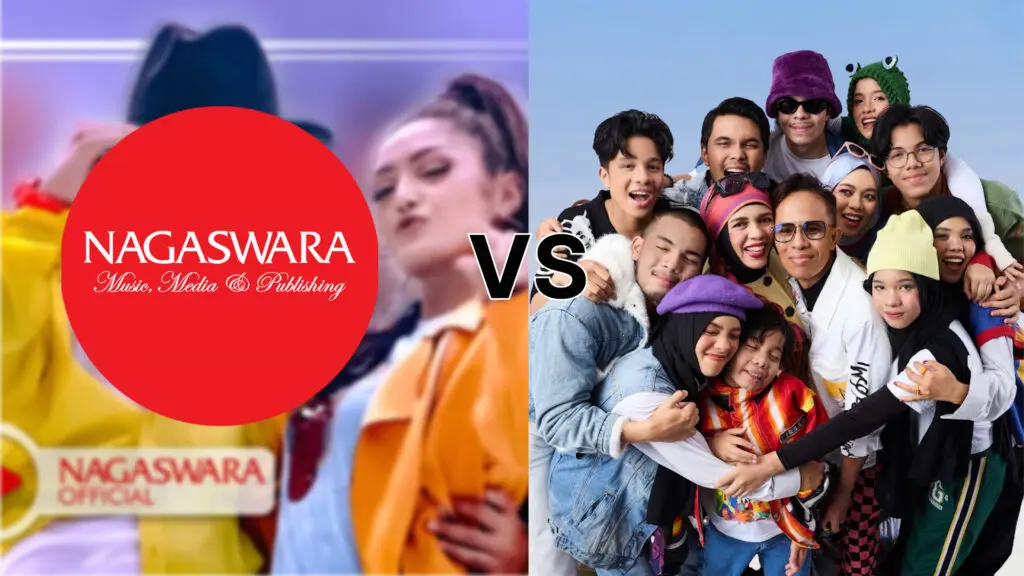
According to Kompas, the case unfolded as follows:
2018: The song “Lagi Syantik” was popularized by Siti Badriah, who is under the auspices of PT Nagaswara. Gen Halilintar made a cover that changed the lyrics without permission from Nagaswara.
2019: PT Nagaswara sued Gen Halilintar to the Central Jakarta District Court. However, the PN Jakpus decided to reject the lawsuit with decision No. 82/Pdt.Sus-Hak Cipta/2019/Pn.Niaga.Jkt.Pst. PT Nagaswara appealed, and the judge again rejected their claim with decision No.910 K/Pdt.SusHKI/2020.
2020: PT Nagaswara filed a review, the MA judge decided to cancel decision No.910 K/Pdt.SusHKI/2020 and partially grant the claim.
The panel of judges decided to side with Nagaswara in decision Number 41 PK/Pdt.Sus-HKI/2021 because the defendant violated Article 5, Article 9 paragraph 1, and Article 9 paragraph 2 of the Copyright Law. Gen Halilintar was asked to pay compensation of IDR 300 million.
Gen Halilintar made a clarification video on YouTube regarding this case, in which they stated that they did not know that changing the lyrics of a song to suit the audience (children) could bring them to court.
Lessons from Intellectual Property (IP) Cases
- Importance of Trademark Registration and Initial Research
- Registering a trademark is essential to obtain legal protection for your brand. This legal protection is crucial to prevent others from using the same or similar brands, which can harm your business.
- Trademark research before starting a business is a very important step. The goal is to prevent disputes later on and ensure the uniqueness of your brand. Using a brand name that is too similar to another brand can cause serious legal problems.
- Trademark Disputes and Resolution
- Trademark disputes can arise if a party feels that its trademark rights have been violated. This dispute can be detrimental to your business’s finances and reputation.
- Efforts to resolve disputes can be made through mediation. However, if mediation fails to reach a meeting point, resolution can be continued through legal channels.
- In trademark disputes, there is a risk of counterclaims (reconvention) that needs to be considered. In addition, court decisions have binding force and can become a precedent for similar cases in the future.
- If a party feels aggrieved by a decision of the Directorate General of Intellectual Property (DJKI), the DJKI can also be sued.
- Legal Implications and Trademark/Copyright Infringement
- Trademark infringers can be punished to pay compensation to the legal trademark owner.
- Changing the lyrics of a song without permission from the copyright holder is a violation of the law. Ignorance of copyright law is not an excuse that can justify infringement. Therefore, a good understanding of the Copyright Law is very important.
- Copyright infringement can lead to lawsuits and the obligation to pay compensation. Making a clarification video after committing a violation does not necessarily eliminate the legal obligation for the violation that has occurred.
- Trademark Registration and Protection Strategies
- In trademark disputes, the “first to file” principle is crucial. Therefore, speed in registering a trademark is very important.
- The classification of products/services registered will determine the scope of protection of your brand.
- To obtain “well-known brand” status, strong evidence of accumulated reputation is required. Establishing this status is the main key in protecting a brand from potential violations.
- If you plan to expand your business to the global market, global brand protection is crucial. Consider registering a trademark in the target country before launching your products or services.
- Documentation of promotions carried out on an ongoing basis is a vital tool for proving Intellectual Property Rights (IPR) disputes.
- Practical Tips for Protecting Intellectual Property Rights (IPR)
- Register the brand in the relevant class
- Save documents of the originality of the work (sketches, .ai files, R&D notes)
- Monitoring brands on e-commerce
- Install anti-counterfeit technology (QR code blockchain)
- Educate employees about IPR policies
- Audit competitor brands/patents
- Use watch notice services for global brands
- Update IPR certificates according to business changes
Practical Tips to Protect Intellectual Property Rights (IPR)
-
Register your brand in the relevant trademark classes
-
Keep authenticity documents (sketches, .ai files, R&D notes)
-
Monitor your brand presence on e-commerce platforms
-
Use anti-counterfeit technology (e.g., blockchain QR codes)
-
Educate employees on IPR policies and compliance
-
Audit competitors’ trademarks and patents
-
Use global trademark watch notice services
-
Update IPR certificates to reflect business changes
FAQ
Can IPR disputes be resolved without going to court?
Yes, through:
- Mediation (Alternative Dispute Resolution).
- Direct Negotiation with official legal notice (somasi).
- Compulsory Licensing (for patents related to public health).
How to report IPR violations online?
- Trademark/Design: Submit a report to the Directorate General of IPR via the Online Reporting System.
- Copyright: Use the APSITEKTI form for digital piracy.
- Marketplace: Report to the IP complain feature (Shopee/Tokopedia) with IPR certificate attachments.
What is the difference between copyright and trademark?
| Aspect | Copyright | Trademark |
| Protection Basis | Automatic when the work is created | Must be registered |
| Duration | Creator’s life + 70 years | 10 years (renewable) |
| Function | Protect expression of ideas | Protect commercial identity |
What is the procedure for filing an IPR violation complaint to the court?
- Somasi: Give a written warning to the perpetrator (min. 14 days).
- Lawsuit: Submit to the Commercial Court with evidence:
- IPR ownership (certificate).
- Evidence of violation (photos, invoices, expert reports).
- Execution: If won, the decision is executed within 30 days.
How do I protect my IPR?
First, identify the type of IPR you have, then follow the IPR registration procedure according to the type of IPR. We recommend that you consult your needs with Widjojo IP Law Firm, which has more than 60 years of experience, to simplify and speed up the entire process of obtaining and maintaining your IPR.